

Managerial Remuneration: Liberalising the Rigmarole of Government Approvals
Prelude
The Ministry of Corporate Affairs vide its notice dated 12th September, 2016 amended Schedule V of the Companies Act, 2013 which inter-alia deals with conditions for appointment and payment of remuneration to managerial personnel. The Government has moved one step forward in its initiative to help Corporates in India to do business with ease. Several provisions of the Act have been liberalized to prevent corporates from going through the rigmarole of government approvals.
An Insight into the Key Changes made in Schedule-V
Section 197 of the Companies Act, 2013 inter alia deals with the overall limits on managerial remuneration. Schedule V prescribes ceiling limit on Managerial Remuneration in cases where the company is making nil or inadequate profits.
1. Amendment pertaining to appointment of Managerial Personnel
- Part I of Schedule V inter alia lists out certain conditions to be fulfilled for the appointment of managerial personnel.
- By virtue of the Amendment, now a person shall not be eligible for appointment as a managing or whole time director or manager of a company if he has been sentenced to imprisonment for any period or to a fine exceeding one thousand rupees for convention of an offence under the Companies Act, 2013 or any other previous company law.
- Prior to the Amendment, the condition on appointment of managerial personnel was restricted only to conviction pertaining to Companies Act, 2013.
2. Increased limit on Managerial Remuneration
- Part II of Schedule V of the Companies Act, 2013 inter alia deals with the limits on managerial remuneration.
- Section II of Part II fixes a ceiling limit on remuneration payable by companies having no profit or inadequate profit without getting the approval of the Central Government.
- The Amendment to Schedule II has doubled the ceiling limit prescribed for managerial remuneration payable by a company having nil or inadequate profits, without the approval of Central Government.
- Companies can pay managerial remuneration not exceeding higher of the limits set forth under (A) or (B) as stated hereunder. The limits set forth under clause (A) is tabulated below:
(A)
| Where the effective capital is | Existing limit of yearly remuneration | Revised limit of yearly remuneration as per MCA Notification |
| Negative or less than 5 crores | 30 lakhs | 60 lakhs |
| 5 crores and above but less than 100 crores | 42 lakhs | 84 lakhs |
| 100 crores and above but less than 250 crores | 60 lakhs | 120 lakhs |
| 250 crores and above | 60 lakhs plus 0.01% of the effective capital in excess of Rs. 250 crores | 120 lakhs plus 0.01% of the effective capital in excess of Rs. 250 crores |
- Maximum remuneration as prescribed under Clause (A) shall be doubled if the resolution passed by the shareholders is a ‘special resolution.’
(B)
Clause (B) of Section II inter alia lays down certain conditions to be fulfilled for a managerial person to be called as a Director functioning in a Professional Capacity. The amendment relieves companies from obtaining previous permission of the Central Government if the conditions stated hereunder are fulfilled at the time of appointment.
Conditions
- No interest, directly or indirectly or through any statutory structures in the capital of the Company, its holding company or any of its subsidiaries; and
- No interest, directly or indirectly or related to the directors or promotors of the company or its holding company or any of its subsidiaries at any time during the last two years before or on or after the date of appointment.
- A graduate level qualification with expertise and specialized knowledge in the field in which the company operates.
- Any employee of a company holding shares of a company not exceeding 0.5% of its paid up share capital under any scheme formulated for allotment of shares to such employees including Employees Stock Option Plan or by way of qualification shall be deemed to be a person not having any interest in the capital of the company.
Provided that the limits specified under items (A) and (B) shall apply, if:
- Payment of remuneration is approved by a resolution passed by the Board and, in the case of a company covered under sub-section (1) of section 178 also by the Nomination and Remuneration Committee;
- The company has not committed any default in repayment of any of its debts (including public deposits) or debentures or interest payable thereon for a continuous period of thirty days in the preceding financial year before the date of appointment of such managerial person and in case of a default, the company obtains prior approval from secured creditors for the proposed remuneration and the fact of such prior approval having been obtained is mentioned in the explanatory statement to the notice convening the general meeting;
- An ordinary resolution or a special resolution, as the case may be, has been passed for payment of remuneration as per the limits laid down in item (A) or a special resolution has been passed for payment of remuneration as per item (B), at the general meeting of the company for a period not exceeding three years.
- A statement along with a notice calling the general meeting referred to in clause (iii) is given to the shareholders containing the information stated thereunder.
Conclusion
The Government by increasing the ceiling limit on managerial remuneration has endeavored to reduce the rigmarole procedure required for government approval. In light of increased government control over the day to day functioning of companies, the Amendment is a significant step towards limiting government control over functioning of Companies. However, the Government has maintained proper checks and balances by imposing certain conditions and limitations with regard to remuneration payable to managerial personnel.
Legality of Fantasy Games in India
The Companies (Transfer of Pending proceedings) Rules, 2016
related post




Leave a comment
You must be logged in to post a comment.

 He holds a Bachelor’s and Master’s Degree in Corporate Secretaryship and a Degree in Law. He is a Fellow member of the Institute of Company Secretaries of India and an Associate Member of the Corporate Governance Institute, UK and Ireland. He has also completed a program from ISB on ‘Value Creation through Mergers and Acquisitions.
 Mr P Muthusamy is an Indian Revenue Service (IRS) officer with an outstanding career of 30+ years of experience and expertise in all niche areas of Indirect Taxes covering a wide spectrum including GST, Customs, GATT Valuation, Central Excise and Foreign Trade.
 During his judicial role, he heard and decided a large number of cases, including some of the most sensitive, complicated, and high-stake matters on insolvency and bankruptcy, including many cases on resolution plans, shareholder disputes and Schemes of Amalgamation, De-mergers, restructuring etc.,
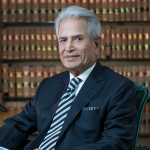 A K Mylsamy is the Founder, Managing Partner and the anchor of the firm. He holds a Degree in law and a Degree in Literature. He is enrolled with the Bar Council of Tamil Nadu.
 Mr. K Rajendran is a former Indian Revenue Service (IRS) officer with a distinguished service of 35 years in the Indirect Taxation Department with rich experience and expertise in the fields of Customs, Central Excise, Service Tax and GST. He possesses Master’s Degree in English literature. Prior to joining the Department, he served for the All India Radio, Coimbatore for a period of about 4 years.
 An MBA from the Indian Institute of Management, Calcutta, and an M.Sc. in Tourism Management from the Scottish Hotel School, UK, Ashok Anantram was one fo the earliest IIM graduates to enter the Indian hospitality industry. He joined India Tourism Development Corporation (ITDC) in 1970 and after a brief stint proceeded to the UK on a scholarship. On his return to India, he joined ITC Hotels Limited in 1975. Over the 30 years in this Organisation, he held senior leadership positions in Sales & Marketing and was its Vice President – Sales & Marketing. He was closely involved in decision making at the corporate level and saw the chain grow from a single hotel in 1975 to a very large multi-brand professional hospitality group.
 Mani holds a Bachelor Degree in Science and P.G. Diploma in Journalism and Public Relations. He has a rich and varied experience of over 4 decades in Banking, Finance, Hospitality and freelance Journalism. He began his career with Andhra Bank and had the benefit of several training programs in Banking.
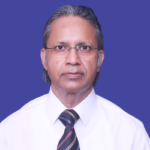 Mr. Kailash Chandra Kala joined the Department of Revenue, Ministry of Finance as ‘Customs Appraiser’ at Mumbai in the year 1993.
 S Ramanujam, is a Chartered Accountant with over 40 years of experience and specialization in areas of Corporate Tax, Mergers or Demergers, Restructuring and Acquisitions. He worked as the Executive Vice-President, Group Taxation of the UB Group, Bangalore.
 K K Balu holds a degree in B.A and B.L and is a Corporate Lawyer having over 50 years of Legal, Teaching and Judicial experience.
 Justice M. Jaichandren hails from an illustrious family of lawyers, academics and politicians. Justice Jaichandren majored in criminology and then qualified as a lawyer by securing a gold medal. He successfully practiced in the Madras High Court and appeared in several civil, criminal, consumer, labour, administrative and debt recovery tribunals. He held office as an Advocate for the Government (Writs Side) in Chennai and was on the panel of several government organizations as senior counsel. His true passion lay in practicing Constitutional laws with focus on writs in the Madras High Court. He was appointed Judge, High Court of Madras in December 2005 and retired in February 2017.
 S Balasubramanian is a Commerce and Law Graduate. He is a member of the Delhi Bar Council, an associate Member of the Institute of Chartered Accountants of India, the Institute of Company Secretaries of India and Management Accountants of India.