

Foreign Remittance to Companies- What’s the big deal ?
Remittance is a collective phrase used to indicate transfer of money from a country to other countries. Depending upon whether the money is being sent or received, it is termed as inward or outward remittance.
Technically, it is a process through which a foreign bank/company transfers the fund to the domestic bank account in the home country. The process is initiated at the foreign nation and takes place with the consent of the customer.

Typically, non-resident Indians send money either to support their families back home or for business and investment purposes. One of the many ways of remitting money is for investing in companies. Non-resident Indians promote companies in their home countries. Alternatively they invest money in already existing companies. For this purpose they remit money (from the country in which they reside) to the country in which the company is incorporated.
Remittance to companies attracts compliance
In the Indian scenario, reporting to RBI is mandatory under FEMA regulations since foreign money comes from across countries into India. If a company is accepting foreign capital, and if allotment of shares are involved, the provisions of the Companies Act, 2013 will have to be additionally complied with. Both regulations stipulate timelines that have to be adhered to. Likewise there is reporting compliance for outward remittance also.
What companies should know when receiving foreign capital
It is imperative upon companies to verify a few essentials before accepting foreign capital:
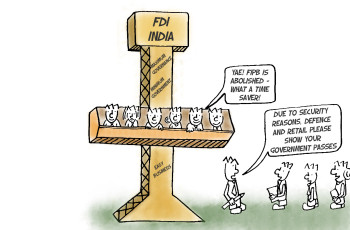
- Whether the specific industry falls under the Governments’ FDI schemes;
- Whether the government has set sectoral caps of investment;
- Whether 100% FDI is allowed or whether FDI is absolutely not allowed;
- Whether investments into the industries is allowed under the automatic route or otherwise.
Reporting compliance by companies accepting foreign capital under automatic route

All reporting happens through the AD category 1 branch of the bank where the company has an account, and which receives the remittance of share capital.
Foreign outward remittance
While the above reporting / compliance is applicable to foreign inward remittance, compliance exists for remittance from India to other countries also i.e., outward remittance. The government announced the Liberalised remittance scheme to facilitate such outward remittance. Under the FEMA regulations, a resident individual is permitted to acquire shares (including bonus shares) or debt instruments of companies abroad, subject to the rules and regulations contained in FEMA. This will also require certification from a CA as well as filing with the IT department.
Penal consequences
Non reporting for failure to report the transaction will invite penal provisions under FEMA. The Company shall have to apply to RBI for compounding of contravention under FEMA. Alternatively, the company make a suo motu application for compounding the delay or contravention. However, companies would benefit in the long run by complying with all reporting requirements rather than invite penal provisions, as such contraventions will come become glaring when the foreign investor wants to repatriate dividends or capital on a later date.
Conclusion
Both foreign inward and outward remittances are closely and continuously monitored by the government to ensure that there is no misuse of funds in the garb of remittance. Remittance – inward or outward require reporting / compliance at various levels. While it is not possible to gather and understand complex and ever changing FEMA laws, individuals and companies (in particular) can seek expert opinion in complying and keeping up with the FEMA laws as and when the need arises.





 He holds a Bachelor’s and Master’s Degree in Corporate Secretaryship and a Degree in Law. He is a Fellow member of the Institute of Company Secretaries of India and an Associate Member of the Corporate Governance Institute, UK and Ireland. He has also completed a program from ISB on ‘Value Creation through Mergers and Acquisitions.
 Mr P Muthusamy is an Indian Revenue Service (IRS) officer with an outstanding career of 30+ years of experience and expertise in all niche areas of Indirect Taxes covering a wide spectrum including GST, Customs, GATT Valuation, Central Excise and Foreign Trade.
 During his judicial role, he heard and decided a large number of cases, including some of the most sensitive, complicated, and high-stake matters on insolvency and bankruptcy, including many cases on resolution plans, shareholder disputes and Schemes of Amalgamation, De-mergers, restructuring etc.,
 A K Mylsamy is the Founder, Managing Partner and the anchor of the firm. He holds a Degree in law and a Degree in Literature. He is enrolled with the Bar Council of Tamil Nadu.
 Mr. K Rajendran is a former Indian Revenue Service (IRS) officer with a distinguished service of 35 years in the Indirect Taxation Department with rich experience and expertise in the fields of Customs, Central Excise, Service Tax and GST. He possesses Master’s Degree in English literature. Prior to joining the Department, he served for the All India Radio, Coimbatore for a period of about 4 years.
 An MBA from the Indian Institute of Management, Calcutta, and an M.Sc. in Tourism Management from the Scottish Hotel School, UK, Ashok Anantram was one fo the earliest IIM graduates to enter the Indian hospitality industry. He joined India Tourism Development Corporation (ITDC) in 1970 and after a brief stint proceeded to the UK on a scholarship. On his return to India, he joined ITC Hotels Limited in 1975. Over the 30 years in this Organisation, he held senior leadership positions in Sales & Marketing and was its Vice President – Sales & Marketing. He was closely involved in decision making at the corporate level and saw the chain grow from a single hotel in 1975 to a very large multi-brand professional hospitality group.
 Mani holds a Bachelor Degree in Science and P.G. Diploma in Journalism and Public Relations. He has a rich and varied experience of over 4 decades in Banking, Finance, Hospitality and freelance Journalism. He began his career with Andhra Bank and had the benefit of several training programs in Banking.
 Mr. Kailash Chandra Kala joined the Department of Revenue, Ministry of Finance as ‘Customs Appraiser’ at Mumbai in the year 1993.
 S Ramanujam, is a Chartered Accountant with over 40 years of experience and specialization in areas of Corporate Tax, Mergers or Demergers, Restructuring and Acquisitions. He worked as the Executive Vice-President, Group Taxation of the UB Group, Bangalore.
 K K Balu holds a degree in B.A and B.L and is a Corporate Lawyer having over 50 years of Legal, Teaching and Judicial experience.
 Justice M. Jaichandren hails from an illustrious family of lawyers, academics and politicians. Justice Jaichandren majored in criminology and then qualified as a lawyer by securing a gold medal. He successfully practiced in the Madras High Court and appeared in several civil, criminal, consumer, labour, administrative and debt recovery tribunals. He held office as an Advocate for the Government (Writs Side) in Chennai and was on the panel of several government organizations as senior counsel. His true passion lay in practicing Constitutional laws with focus on writs in the Madras High Court. He was appointed Judge, High Court of Madras in December 2005 and retired in February 2017.
 S Balasubramanian is a Commerce and Law Graduate. He is a member of the Delhi Bar Council, an associate Member of the Institute of Chartered Accountants of India, the Institute of Company Secretaries of India and Management Accountants of India.