
8 things to know about Apostille…!
-
What is Apostille?
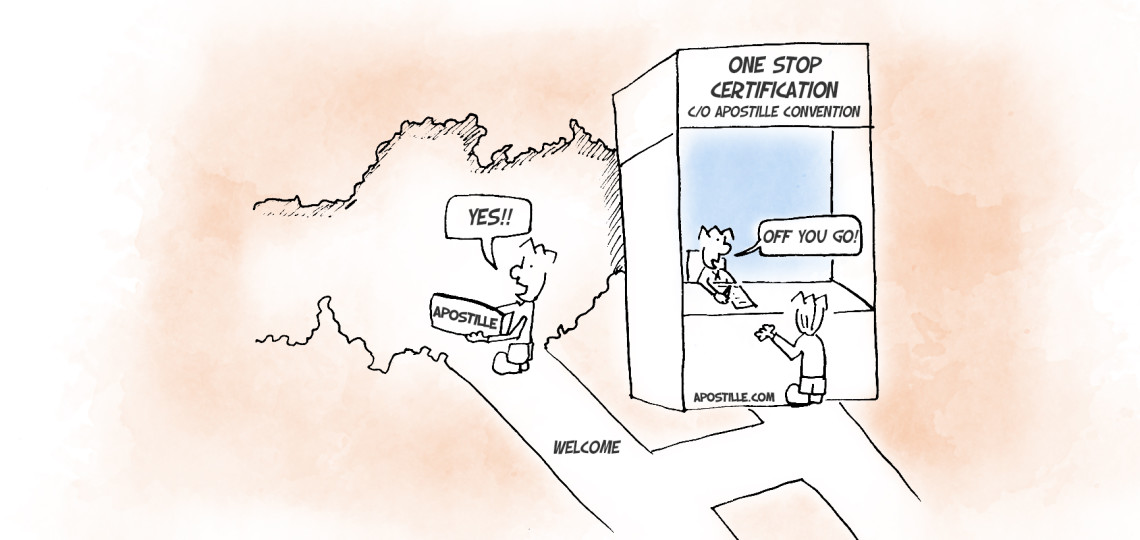
Apostille or apostilling is the process of additional authentication of various documents for their use in other countries/ nations. The Hague Convention of October 5, 1961 abolished the requirement of cumbersome process of legalization of foreign public documents through multiple channels of verification. Apostille is a simplified one stop certification of public documents in their country of origin which can be used in all other countries that are members of The Hague Convention. There are 113 member countries as of August, 2016. India joined The Hague / Apostille convention in 2005.
-
Why apostille documents?
Documents that are apostilled in their country of origin will carry the same legal authenticity and value in all other countries in which it may be submitted or presented. Any documents apostilled in one member country will be acceptable in all member countries who have signed the Hague Convention, 1961 thereby simplifying the process of getting the document attested for each of the countries separately.
It is to be noted that the apostille only authenticates the origin of the public document; it certifies that authenticity of the signature / seal and capacity of the person or authority that who signed the document. It does not certify the content of the public document.
-
When to apostille documents?
Apostille of documents are required only if the following conditions are satisfied:
- The country where the document was issued is party to the Apostille Convention
- The country in which the document is to be submitted / presented is party to the Apostille convention
- The document is a public document.
- The country in which the document is to be submitted / presented requires an apostille in order to accept the document as a foreign public document.
-
Who can Apostille documents?
The documents are normally apostilled by the Judge, State Registrar, County Clerk and Notary Public of the countries in which the document originates.
In India, all documents requiring apostilling have to first be authenticated by the designated authorities of the State / Union Territories from where the document has been issued. In case of personal documents the concerned departments that issued them have to authenticate them. On and from August, 2007 the Ministry of External Affairs (MEA) has begun issuing apostille certificates through its designated outsourced agencies. With effect from 13th October, 2016 the legalization process has been decentralised to regional passport offices in Bangalore, Chandigarh, Goa, Mumbai and Trivandrum
-
How is Apostille Certificate issued?
The authentication process is a single step formality by way of issuance of an authentication certificate by an authority designated by the country where the public document was issued. This certificate is called an Apostille. The apostille is normally executed as paper document. Some member countries have begun issuing the apostille in electronic forms (e-Apostille). The Hague Apostille convention itself has laid down a model certificate as an annexure. The purpose of the Model Apostille Certificate is to ensure that Apostilles issued by the various Contracting States are clearly identifiable in all other Contracting States, thereby facilitating the circulation of public documents abroad. For this reason, Apostilles issued by Competent Authorities should conform as closely as possible to the Model Apostille Certificate.
In particular, an Apostille must:
- bear the title in French ‘Apostille (Convention de La Haye du 5 octobre 1961); and
- contain the 10 numbered standard informational items.
-
What documents require Apostille?
The Apostille Convention lists the following four categories of documents that are deemed to be “public documents” (see Art. 1(2)):
- Documents emanating from an authority or an official connected with a court or tribunal, including those emanating from a public prosecutor, a clerk of a court or a process-server.
- Administrative documents;
- Notarial acts;
- Official certificates which are placed on documents signed by persons in their private capacity, such as official certificates recording the registration of a document or the fact that it was in existence on a certain date and official and notarial authentications of signatures.
Broadly, public documents are documents including but not limited to:
Personal documents: Birth certificates, marriage certificates, adoption papers, divorce decrees, affidavits etc.
Educational documents: School and college completion certificates, diploma and degree certificates etc.
Corporate documents: Incorporation related documents such as Memorandum & Articles of Association, patent applications, true copies of Board and general meeting resolutions, Agreements, patent applications etc.
-
What to keep in mind while apostilling document(s)?
- Whether the apostille convention applies to both the countries – the one that issued the public document and the one where it is intended to be submitted / presented;
- Whether the document to be apostilled is a public document;
- The relevant authority who is competent to apostille the public document in the country of origin;
-
When will apostilled documents not be recognised or rejected?
- When apostilled documents are produced in the non-member countries to the convention.
- An Apostille will not be used for the recognition of a document in the country where that document was issued – Apostilles are strictly for use of public documents abroad.
- ‘Apostille Certificates’ issued by countries that are not party to the Convention must be rejected in all other States as being contrary to the Convention.
- The format differs radically from the Model Certificate as laid down by the Convention.





 He holds a Bachelor’s and Master’s Degree in Corporate Secretaryship and a Degree in Law. He is a Fellow member of the Institute of Company Secretaries of India and an Associate Member of the Corporate Governance Institute, UK and Ireland. He has also completed a program from ISB on ‘Value Creation through Mergers and Acquisitions.
 Mr P Muthusamy is an Indian Revenue Service (IRS) officer with an outstanding career of 30+ years of experience and expertise in all niche areas of Indirect Taxes covering a wide spectrum including GST, Customs, GATT Valuation, Central Excise and Foreign Trade.
 During his judicial role, he heard and decided a large number of cases, including some of the most sensitive, complicated, and high-stake matters on insolvency and bankruptcy, including many cases on resolution plans, shareholder disputes and Schemes of Amalgamation, De-mergers, restructuring etc.,
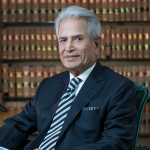 A K Mylsamy is the Founder, Managing Partner and the anchor of the firm. He holds a Degree in law and a Degree in Literature. He is enrolled with the Bar Council of Tamil Nadu.
 Mr. K Rajendran is a former Indian Revenue Service (IRS) officer with a distinguished service of 35 years in the Indirect Taxation Department with rich experience and expertise in the fields of Customs, Central Excise, Service Tax and GST. He possesses Master’s Degree in English literature. Prior to joining the Department, he served for the All India Radio, Coimbatore for a period of about 4 years.
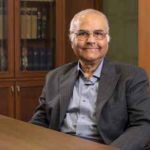 An MBA from the Indian Institute of Management, Calcutta, and an M.Sc. in Tourism Management from the Scottish Hotel School, UK, Ashok Anantram was one fo the earliest IIM graduates to enter the Indian hospitality industry. He joined India Tourism Development Corporation (ITDC) in 1970 and after a brief stint proceeded to the UK on a scholarship. On his return to India, he joined ITC Hotels Limited in 1975. Over the 30 years in this Organisation, he held senior leadership positions in Sales & Marketing and was its Vice President – Sales & Marketing. He was closely involved in decision making at the corporate level and saw the chain grow from a single hotel in 1975 to a very large multi-brand professional hospitality group.
 Mani holds a Bachelor Degree in Science and P.G. Diploma in Journalism and Public Relations. He has a rich and varied experience of over 4 decades in Banking, Finance, Hospitality and freelance Journalism. He began his career with Andhra Bank and had the benefit of several training programs in Banking.
 Mr. Kailash Chandra Kala joined the Department of Revenue, Ministry of Finance as ‘Customs Appraiser’ at Mumbai in the year 1993.
 S Ramanujam, is a Chartered Accountant with over 40 years of experience and specialization in areas of Corporate Tax, Mergers or Demergers, Restructuring and Acquisitions. He worked as the Executive Vice-President, Group Taxation of the UB Group, Bangalore.
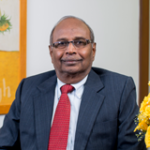 K K Balu holds a degree in B.A and B.L and is a Corporate Lawyer having over 50 years of Legal, Teaching and Judicial experience.
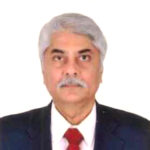 Justice M. Jaichandren hails from an illustrious family of lawyers, academics and politicians. Justice Jaichandren majored in criminology and then qualified as a lawyer by securing a gold medal. He successfully practiced in the Madras High Court and appeared in several civil, criminal, consumer, labour, administrative and debt recovery tribunals. He held office as an Advocate for the Government (Writs Side) in Chennai and was on the panel of several government organizations as senior counsel. His true passion lay in practicing Constitutional laws with focus on writs in the Madras High Court. He was appointed Judge, High Court of Madras in December 2005 and retired in February 2017.
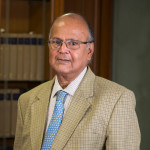 S Balasubramanian is a Commerce and Law Graduate. He is a member of the Delhi Bar Council, an associate Member of the Institute of Chartered Accountants of India, the Institute of Company Secretaries of India and Management Accountants of India.