
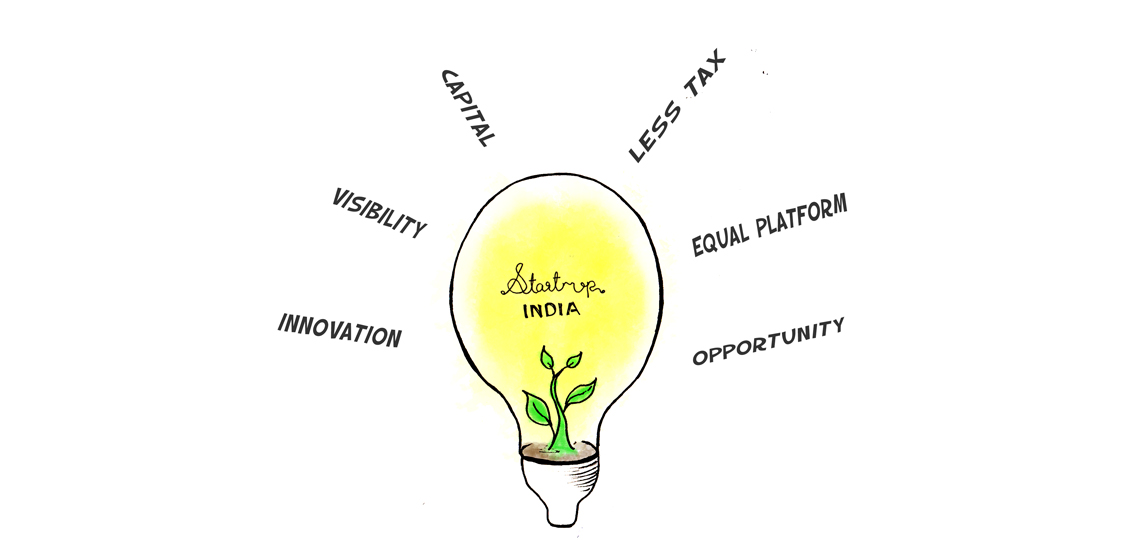
Startup India
April 4, 2016
Startup India is a prime initiative of the Government of India, envisioned to build a strong eco-system for fostering innovation and Startups in the country that will drive viable economic growth and generate enormous employment prospects.
In order to meet the objectives of the initiative, Government of India has announced Action Plan that addresses all aspects of the Startup ecosystem.
Objectives of Startup India Action-plan:
Few objectives of the Startup India Action-plan are summarized here.
- To reduce the regulatory burden on Startups thereby allowing them to focus on their core business and keep compliance cost low
- To create a single point of contact for the entire Startup ecosystem and enable knowledge exchange and access to funding
- To provide an equal platform to Startups (in the manufacturing sector) vis-à-vis the experienced entrepreneurs/ companies in public procurement.
- To make it easier for Startups to wind up operations
- To provide funding support for development and growth of innovation driven enterprises
- To catalyze entrepreneurship by providing credit to innovators across all sections of society
- Self certification – The start-ups will adopt self-certification to reduce the regulatory liabilities. The self-certification will apply to laws including payment of gratuity, labor contract, provident fund management, water and air pollution acts.
- Start-up India hub – An all-India hub will be created as a single contact point for start-up foundations in India, which will help the entrepreneurs to exchange knowledge and access financial aid.
- Register through app – An online portal, in the shape of a mobile application, will be launched to help start-up founders to easily register. The app is scheduled to be launched on April 1.
- Patent protection – A fast-track system for patent examination at lower costs is being conceptualised by the central government. The system will promote awareness and adoption of the Intellectual Property Rights (IPRs) by the start-up foundations.
- Rs 10,000 crore fund – The government will develop a fund with an initial corpus of Rs 2,500 crore and a total corpus of Rs 10,000 crore over four years, to support upcoming start-up enterprises. The Life Insurance Corporation of India will play a major role in developing this corpus. A committee of private professionals selected from the start-up industry will manage the fund.
- National Credit Guarantee Trust Company – A National Credit Guarantee Trust Company (NCGTC) is being conceptualized with a budget of Rs 500 crore per year for the next four years to support the flow of funds to start-ups.
- No Capital Gains Tax – At present, investments by venture capital funds are exempt from the Capital Gains Tax. The same policy is being implemented on primary-level investments in start-ups.
- No Income Tax for three years – Start-ups would not pay Income Tax for three years. This policy would revolutionize the pace with which start-ups would grow in the future.
- Tax exemption for investments of higher value – In case of an investment of higher value than the market price, it will be exempt from paying tax
- Building entrepreneurs – Innovation-related study plans for students in over 5 lakh schools. Besides, there will also be an annual incubator grand challenge to develop world class incubators.
- Atal Innovation Mission – The Atal Innovation Mission will be launched to boost innovation and encourage talented youths.
- Setting up incubators – A private-public partnership model is being considered for 35 new incubators and 31 innovation centers at national institutes.
- Research parks – The government plans to set up seven new research parks, including six in the Indian Institute of Technology campuses and one in the Indian Institute of Science campus, with an investment of Rs 100 crore each.
- Entrepreneurship in biotechnology – The government will further establish five new biotech clusters, 50 new bio incubators, 150 technology transfer offices and 20 bio-connect offices in the country.
- Dedicated programmes in schools – The government will introduce innovation-related programs for students in over 5 lakh schools.
- Legal support – A panel of facilitators will provide legal support and assistance in submitting patent applications and other official documents.
- Rebate – A rebate amount of 80 percent of the total value will be provided to the entrepreneurs on filing patent applications.
- Easy rules – Norms of public procurement and rules of trading have been simplified for the start-ups.
- Faster exit – If a start-up fails, the government will also assist the entrepreneurs to find suitable solutions for their problems. If they fail again, the government will provide an easy way out.



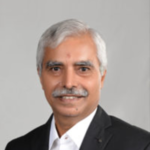
 He holds a Bachelor’s and Master’s Degree in Corporate Secretaryship and a Degree in Law. He is a Fellow member of the Institute of Company Secretaries of India and an Associate Member of the Corporate Governance Institute, UK and Ireland. He has also completed a program from ISB on ‘Value Creation through Mergers and Acquisitions.
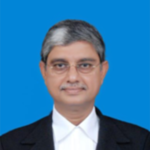
 Mr P Muthusamy is an Indian Revenue Service (IRS) officer with an outstanding career of 30+ years of experience and expertise in all niche areas of Indirect Taxes covering a wide spectrum including GST, Customs, GATT Valuation, Central Excise and Foreign Trade.
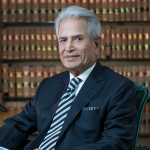
 During his judicial role, he heard and decided a large number of cases, including some of the most sensitive, complicated, and high-stake matters on insolvency and bankruptcy, including many cases on resolution plans, shareholder disputes and Schemes of Amalgamation, De-mergers, restructuring etc.,
 A K Mylsamy is the Founder, Managing Partner and the anchor of the firm. He holds a Degree in law and a Degree in Literature. He is enrolled with the Bar Council of Tamil Nadu.
 Mr. K Rajendran is a former Indian Revenue Service (IRS) officer with a distinguished service of 35 years in the Indirect Taxation Department with rich experience and expertise in the fields of Customs, Central Excise, Service Tax and GST. He possesses Master’s Degree in English literature. Prior to joining the Department, he served for the All India Radio, Coimbatore for a period of about 4 years.
 An MBA from the Indian Institute of Management, Calcutta, and an M.Sc. in Tourism Management from the Scottish Hotel School, UK, Ashok Anantram was one fo the earliest IIM graduates to enter the Indian hospitality industry. He joined India Tourism Development Corporation (ITDC) in 1970 and after a brief stint proceeded to the UK on a scholarship. On his return to India, he joined ITC Hotels Limited in 1975. Over the 30 years in this Organisation, he held senior leadership positions in Sales & Marketing and was its Vice President – Sales & Marketing. He was closely involved in decision making at the corporate level and saw the chain grow from a single hotel in 1975 to a very large multi-brand professional hospitality group.
 Mani holds a Bachelor Degree in Science and P.G. Diploma in Journalism and Public Relations. He has a rich and varied experience of over 4 decades in Banking, Finance, Hospitality and freelance Journalism. He began his career with Andhra Bank and had the benefit of several training programs in Banking.
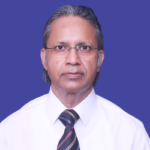 Mr. Kailash Chandra Kala joined the Department of Revenue, Ministry of Finance as ‘Customs Appraiser’ at Mumbai in the year 1993.
 S Ramanujam, is a Chartered Accountant with over 40 years of experience and specialization in areas of Corporate Tax, Mergers or Demergers, Restructuring and Acquisitions. He worked as the Executive Vice-President, Group Taxation of the UB Group, Bangalore.
 K K Balu holds a degree in B.A and B.L and is a Corporate Lawyer having over 50 years of Legal, Teaching and Judicial experience.
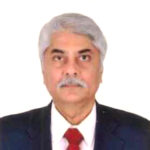 Justice M. Jaichandren hails from an illustrious family of lawyers, academics and politicians. Justice Jaichandren majored in criminology and then qualified as a lawyer by securing a gold medal. He successfully practiced in the Madras High Court and appeared in several civil, criminal, consumer, labour, administrative and debt recovery tribunals. He held office as an Advocate for the Government (Writs Side) in Chennai and was on the panel of several government organizations as senior counsel. His true passion lay in practicing Constitutional laws with focus on writs in the Madras High Court. He was appointed Judge, High Court of Madras in December 2005 and retired in February 2017.
 S Balasubramanian is a Commerce and Law Graduate. He is a member of the Delhi Bar Council, an associate Member of the Institute of Chartered Accountants of India, the Institute of Company Secretaries of India and Management Accountants of India.