
Demonetisation – Black Money Hoarders to Shell out more Tax than Ever
Demonetisation is a term well acquainted by everyone in the past month. On the night of November 8, 2016, India witnessed the single most important economic reform to be done since Independence. All of the Rs.500 and Rs.1000 notes were no longer a legal tender in overnight. This major decision was primarily focused to unearth the Black Money present in the country. In furtherance to this move, the Government has decided to amend the taxation laws so that people do not find illegal ways to convert their existing black money into black money again.
The two main takeaways from the amendment are:
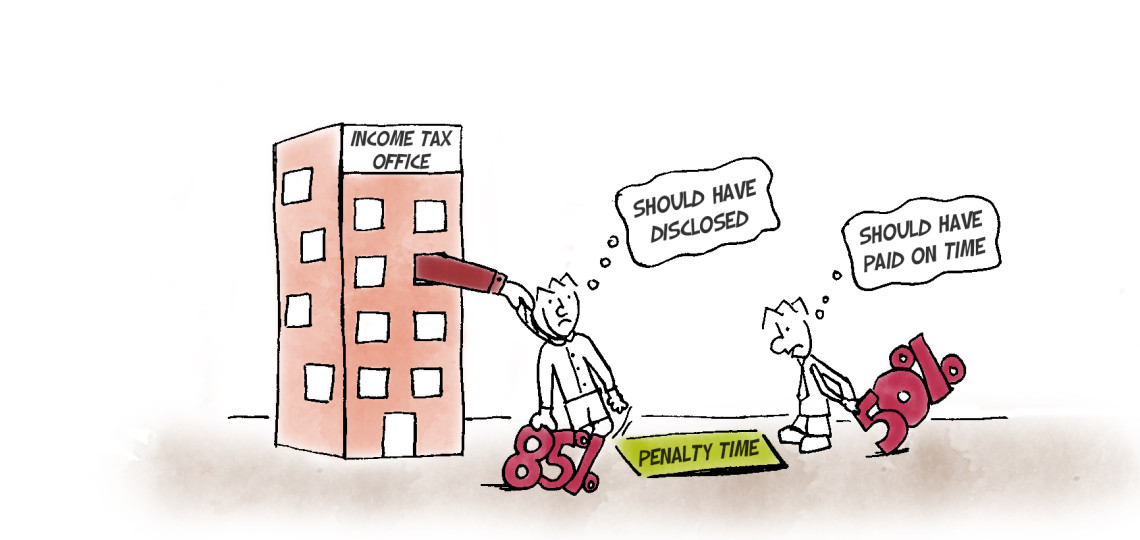
- Voluntary disclosure will attract a tax @ 50% including penalty.
- Unaccounted income or assets will attract a tax @ 85% including penalty.
Taxation Laws (Second Amendment) Bill, 2016 was passed in the Lok Sabha on November 29, 2016. The Bill amends provisions of the Income Tax Act, levying higher rates of tax for the defaulters. Section 115BBE of the Act is amended to increase the tax rate for the offenders. Those people with unaccounted assets, credits, investments or cash and those found illegally converting money will have to pay 60% tax along with the concerned penalties which would amount to a total of 85%. The minimum level of penalties under Section 271AAB has also been increased from 10% to 30% of the income. The 50% tax for voluntary disclosure is included along with the Bill as a part of the Pradhan Mantri Scheme.
Pradhan Mantri Garib Kalyan Yojana, 2016’ (PMGKY)
In the Tax Laws Amendment Bill, the Taxation and Investment Regime for Pradhan Mantri Garib Kalyan Yojana, 2016’ (PMGKY) has been proposed. A person voluntarily disclosing his black money will come under this scheme. Those who declare will be required to pay a tax at 30% and a penalty at 10%, both on the undisclosed income. A surcharge of 33% of the tax paid, called Pradhan Mantri Garib Kalyan Cess, will also be levied. Adding up to a total of 50%. The declarant has to deposit 25% of this declared income in the Pradhan Mantri Garib Kalyan Deposit Scheme, 2016, which is a four-year interest free deposit. The monies in this scheme is to be used for welfare purposed such as irrigation, housing, toilets, primary health care, and education.
Overview of Amendments Proposed
| PARTICULARS | EXISTING PROVISIONS | PROPOSED PROVISIONS |
| General provision for penalty | PENALTY (Section 270A)
Under-reporting – @50% of tax Misreporting – @200% of tax (Under-reporting/ Misreporting income is normally difference between returned income and assessed income) |
No changes proposed |
| Provisions for taxation & penalty of unexplained credit, investment, cash and other assets | TAX (Section 115BBE)
Flat rate of tax @30% + surcharge + cess (No expense, deductions, set-off is allowed)
|
TAX (Section 115BBE)
Flat rate of tax @60% + surcharge @25% of tax (i.e. 15% of such income). So total incidence of tax is 75% approx. (No expense, deductions, set-off is allowed) PENALTY (Section 271AAC) If Assessing Officer determines income referred to in section 115BBE, penalty @10% of tax payable in addition to tax (including surcharge) of 75%. |
| Penalty for search seizure cases | Penalty (271AAB)
(i) 10% of income, if admitted, returned and taxes are paid (ii) 20% of income, if not admitted but returned and taxes are paid (iii) 60% of income in any other case |
Penalty (271AAB)
(i) 30% of income, if admitted, returned and taxes are paid (ii) 60% of income in any other case |
| Taxation and Investment Regime for Pradhan Mantri Garib Kalyan Yojana, 2016’ (PMGKY) | New Taxation and InvestmentRegime | Undisclosed income in the form of cash & bank deposit can be declared:
(A) Tax, Surcharge, Penalty payable Tax @30% of income declared Surcharge @33% of tax Penalty @10% of income declared Total @50% of income (approx.)
(B) Deposit 25% of declared income to be deposited in interest free Deposit Scheme for four years. |
Conclusion
The Amendment to the Act intends to curb the widespread presence of Black Money in the country and at the same time the Government can use them for welfare activities. The declaration scheme is a last chance for the defaulters to come out of their closets and disclose their unaccounted income. There had been several instances where many were trying to illegally convert their black money even after demonetising the higher denomination notes. Levying of higher rates of tax is bound to instill fear in the minds of the defaulters and would eventually bring down the amount of Black money drastically.
Source: Press Information Bureau, Government of India Ministry of Finance (Dt: 28.11.2016)
The Companies (Transfer of Pending Proceedings) Rules, 2016
Exchange facility to foreign citizens

Leave a comment
You must be logged in to post a comment.

 He holds a Bachelor’s and Master’s Degree in Corporate Secretaryship and a Degree in Law. He is a Fellow member of the Institute of Company Secretaries of India and an Associate Member of the Corporate Governance Institute, UK and Ireland. He has also completed a program from ISB on ‘Value Creation through Mergers and Acquisitions.
 Mr P Muthusamy is an Indian Revenue Service (IRS) officer with an outstanding career of 30+ years of experience and expertise in all niche areas of Indirect Taxes covering a wide spectrum including GST, Customs, GATT Valuation, Central Excise and Foreign Trade.
 During his judicial role, he heard and decided a large number of cases, including some of the most sensitive, complicated, and high-stake matters on insolvency and bankruptcy, including many cases on resolution plans, shareholder disputes and Schemes of Amalgamation, De-mergers, restructuring etc.,
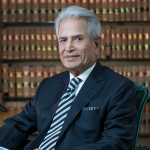 A K Mylsamy is the Founder, Managing Partner and the anchor of the firm. He holds a Degree in law and a Degree in Literature. He is enrolled with the Bar Council of Tamil Nadu.
 Mr. K Rajendran is a former Indian Revenue Service (IRS) officer with a distinguished service of 35 years in the Indirect Taxation Department with rich experience and expertise in the fields of Customs, Central Excise, Service Tax and GST. He possesses Master’s Degree in English literature. Prior to joining the Department, he served for the All India Radio, Coimbatore for a period of about 4 years.
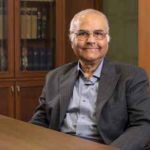 An MBA from the Indian Institute of Management, Calcutta, and an M.Sc. in Tourism Management from the Scottish Hotel School, UK, Ashok Anantram was one fo the earliest IIM graduates to enter the Indian hospitality industry. He joined India Tourism Development Corporation (ITDC) in 1970 and after a brief stint proceeded to the UK on a scholarship. On his return to India, he joined ITC Hotels Limited in 1975. Over the 30 years in this Organisation, he held senior leadership positions in Sales & Marketing and was its Vice President – Sales & Marketing. He was closely involved in decision making at the corporate level and saw the chain grow from a single hotel in 1975 to a very large multi-brand professional hospitality group.
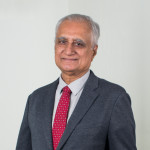 Mani holds a Bachelor Degree in Science and P.G. Diploma in Journalism and Public Relations. He has a rich and varied experience of over 4 decades in Banking, Finance, Hospitality and freelance Journalism. He began his career with Andhra Bank and had the benefit of several training programs in Banking.
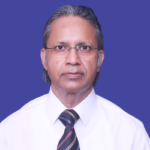 Mr. Kailash Chandra Kala joined the Department of Revenue, Ministry of Finance as ‘Customs Appraiser’ at Mumbai in the year 1993.
 S Ramanujam, is a Chartered Accountant with over 40 years of experience and specialization in areas of Corporate Tax, Mergers or Demergers, Restructuring and Acquisitions. He worked as the Executive Vice-President, Group Taxation of the UB Group, Bangalore.
 K K Balu holds a degree in B.A and B.L and is a Corporate Lawyer having over 50 years of Legal, Teaching and Judicial experience.
 Justice M. Jaichandren hails from an illustrious family of lawyers, academics and politicians. Justice Jaichandren majored in criminology and then qualified as a lawyer by securing a gold medal. He successfully practiced in the Madras High Court and appeared in several civil, criminal, consumer, labour, administrative and debt recovery tribunals. He held office as an Advocate for the Government (Writs Side) in Chennai and was on the panel of several government organizations as senior counsel. His true passion lay in practicing Constitutional laws with focus on writs in the Madras High Court. He was appointed Judge, High Court of Madras in December 2005 and retired in February 2017.
 S Balasubramanian is a Commerce and Law Graduate. He is a member of the Delhi Bar Council, an associate Member of the Institute of Chartered Accountants of India, the Institute of Company Secretaries of India and Management Accountants of India.