
Sound…Smell… & The IP World – Transcending Aural and Olfactory Boundaries
The Evolution of technology and the animated rise towards securing the competitive edge in the rapidly expanding global arena, has led to brands grappling for distinctiveness among its contenders. But the true challenge faced by brands post procurement of dedicated clientele is to further facilitate consumers to successfully identify the goods or services preferred by them over the rejection of all other brands; for this purpose it becomes essential to establish brand presence through Trade Marks – but in today’s commercial environment, mere registration of brand names, a design or a particular logo would not suffice when in reality the brand could be associated with the consumer in many other relevant modes, thus the recognition and registration of distinctive unconventional marks such as sound, taste, touch, colour and olfactory marks came into motion.
Though at first instance, the roar of a lion, the rev of a motorcycle engine, the start-up-tune in a mobile device, the smell of freshly cut grass, a unique kind of smell from a bottle of bear or someone yodelling YAHOO!, sounds like they have absolutely nothing in common, but all of these have distinctively come up to be associated representations of a particular brand by the consumer, thus effectively transcending the notion that only conventional marks can be registered.
A sound or smell trademark is necessarily an unconventional trademark obtained based on the relative usage of sound or smell in performing the function of successfully identifying the unique commercial origin of the products and services it is associated with.
Smell is said to play a vital correspondence in impacting human memory and businessmen try to exploit it by associating it with their products. Sound and smell marks are said to be some of the prominent forms of non-conventional trademarks which have gained popularity in the recent past. In India, Statutory protection was offered for such unconventional marks under Section 2(1) (zb) of the Trademarks Act, 1999. The Primary requirement being that the Mark to be registered must hold the capacity to be graphically represented (not visually perceptible) and is capable of being distinguished from the goods or services offered by others, and Sound Marks such as the Yodel of Yahoo, the 3 note chime of Intel Pentium Processor, the Nokia default tone or Metro Goldwyn Mayer’s roar of a lion, all carry and fulfill the criteria of being unique and represented distinctively from the goods and services of others.
Though the Indian Trademarks Act,1999 does not either recognize or restricts the registration of Sound Marks, the terms and requirements set out in registering a Sound Mark in the international perspective follows two different approaches the UK approach and the US approach.
In terms of the UK approach, it is an essential requirement that the Sound to be Registered must be capable of graphical representation in the form of musical notation in addition to its description. The US approach however in addition to the description requirement, needs brands to provide, the description of the sound mark through an audio or video representation, this is mainly to determine the clarity and precision of the mark, the ideology adhered here being that, every person or layman associated with the mark cannot read musical notations in-order to comprehend the relevant mark, The US system therefore accepts sound representations made through CD’s or Mp3’s as well. In the case of Shield Mark B -Vs- Kist 1decided upon by the European Court of Justice it was held that specific musical notations would be satisfied certain necessary requirements if they were “represented by a stave divided into measures and showing, in particular, a clef, musical notes and rests whose form indicates the relative values and, where necessary, accidentals”. In India, the Shield Mark Doctrine is directly adopted to an extent such that the Trademark Practices and Procedures Draft Manual has stated the same requirements in terms of trademark registration. Representations through CD or Sonogram’s are also accepted, provided that the tangible representations made are provided in a precisely clear and intelligible manner.
When it comes to smell or olfactory marks, there are two main difficulties in registering a smell mark. The first one is graphical representation of smell mark. If it is contained in a bottle it would decay over time. On the other hand, chemical formula would represent the substance itself rather than its smell. Therefore, it is essential to represent it in a precise manner so as to distinguish it from the product in which it is contained. The second difficulty in getting a smell mark registered is in proving its distinctiveness. It is important to establish that the smell associated with the product is not because of the inherent nature of the product by itself. In other words, success in registering a smell mark lies in getting through its ‘non-functionality’ test. The smell mark to be registered, should be able to distinguish from the product from that of others without doing any other significant function.
The first smell mark to be registered in US was for a fresh, floral fragrance associated with a sewing thread and embroidery yarn in re Celia Clarke in 1990. The mark was registered as it was proved that the fragrance associated with the product is not the very essence of the product itself. In UK, the issue was addressed in Sieckman’s 2 case where it was held that in order to register a smell mark, “clear, precise, self-contained, easily accessible, intelligible, durable and objective” way of graphical representation is essential apart from the element of distinctiveness.
The necessity for investing in making Sound Marks, and registering such marks is that the prolonged use of such marks have had a subliminal effect on the minds of the listener and the catchier or peppier the jingle, the more substantial is the effect of implementation and association in the minds of the consumers, which in turn has contributed to the retention of the brands image in the consumer’s memory and subsequently catering to better selling proportions. Furthermore, a Sound Mark which subliminally triggers the sensory receptors has projected to have a strong positive perception to the way individuals associate with the brand and is seen to have a longer lingering effect on the individuals in reception to it.
From NBC’s registration of the worlds very first “three chimes” sound mark in 1950, to India granting the Yahoo’s “yodel” sound mark protection in 2009 which paved its way to the subsequent registration of other sound marks in India such as the Nokia – Default Ringtone, ICICI – Chime tune and Allianz Aktiengesellschaft being some of the notable brands that have been granted sound mark protection in the Indian Subcontinent no cases of Sound Mark Infringement have been notes thus far; the concept of Sound Mark registration has had a wide scoped impact on the working perception of brand protection and customer based interactions. However, since the Trademarks Act, 1999 mandates graphical representation and distinctive nature as criteria for a trademark to be registered, it acts as an impediment in registering smell marks in India; these hurdles may disappear in the near future owing to the precedents of the US and UK law, as the inclusion of smell marks world-over would prove to be a substantial intellectual property breakthrough. In the current scenario, The Indian Trade Mark Registry has transversed a huge milestone in awarding and recognising non-conventional trademarks such as Aural Marks as an essential intellectual property, having the prospective potential of influencing individuals and subsequently protecting the brands interest of protecting their goods and services.
FAMOUS SOUND TRADEMARKS:
S.NO |
BRAND |
SOUND MARKS |
LOGO |
| 1. | YAHOO! | YODEL |  |
| 2. | NOKIA | NOKIA-DEFAULT RINGTONE |  |
| 3. | ICICI | ICICI JINGLE |  |
| 4. | ALLIANZ AKTIENGESELLSCHAFT | CHIME TONE |  |
| 5. | METRO-GOLDWYN MAYER CORP | LION ROARING |  |
| 6. | NATIONAL BROADCASTING CORPORATION | NBC CHIME |  |
| 7. | TWENTIETH CENTURY FOX FILM PRODUCTION | 20TH CENTURY FOX THEME |  |
| 8. | TIME WARNER ENTERTAINMENT COMPANY | MERRIE MELODIES THEME SONG |  |
| 9.
|
EDGAR RICE BURROUGHS. INC | SOUND OF FAMOUS TARZAN YELL |  |
| 10. | INTEL INSIDE | INTEL INSIDE BONG |  |
Discontinuation of Reporting of Bank Guarantee on behalf of service importers
Companies (Incorporation) Third Amendment Rules, 2016

Leave a comment
You must be logged in to post a comment.

 He holds a Bachelor’s and Master’s Degree in Corporate Secretaryship and a Degree in Law. He is a Fellow member of the Institute of Company Secretaries of India and an Associate Member of the Corporate Governance Institute, UK and Ireland. He has also completed a program from ISB on ‘Value Creation through Mergers and Acquisitions.
 Mr P Muthusamy is an Indian Revenue Service (IRS) officer with an outstanding career of 30+ years of experience and expertise in all niche areas of Indirect Taxes covering a wide spectrum including GST, Customs, GATT Valuation, Central Excise and Foreign Trade.
 During his judicial role, he heard and decided a large number of cases, including some of the most sensitive, complicated, and high-stake matters on insolvency and bankruptcy, including many cases on resolution plans, shareholder disputes and Schemes of Amalgamation, De-mergers, restructuring etc.,
 A K Mylsamy is the Founder, Managing Partner and the anchor of the firm. He holds a Degree in law and a Degree in Literature. He is enrolled with the Bar Council of Tamil Nadu.
 Mr. K Rajendran is a former Indian Revenue Service (IRS) officer with a distinguished service of 35 years in the Indirect Taxation Department with rich experience and expertise in the fields of Customs, Central Excise, Service Tax and GST. He possesses Master’s Degree in English literature. Prior to joining the Department, he served for the All India Radio, Coimbatore for a period of about 4 years.
 An MBA from the Indian Institute of Management, Calcutta, and an M.Sc. in Tourism Management from the Scottish Hotel School, UK, Ashok Anantram was one fo the earliest IIM graduates to enter the Indian hospitality industry. He joined India Tourism Development Corporation (ITDC) in 1970 and after a brief stint proceeded to the UK on a scholarship. On his return to India, he joined ITC Hotels Limited in 1975. Over the 30 years in this Organisation, he held senior leadership positions in Sales & Marketing and was its Vice President – Sales & Marketing. He was closely involved in decision making at the corporate level and saw the chain grow from a single hotel in 1975 to a very large multi-brand professional hospitality group.
 Mani holds a Bachelor Degree in Science and P.G. Diploma in Journalism and Public Relations. He has a rich and varied experience of over 4 decades in Banking, Finance, Hospitality and freelance Journalism. He began his career with Andhra Bank and had the benefit of several training programs in Banking.
 Mr. Kailash Chandra Kala joined the Department of Revenue, Ministry of Finance as ‘Customs Appraiser’ at Mumbai in the year 1993.
 S Ramanujam, is a Chartered Accountant with over 40 years of experience and specialization in areas of Corporate Tax, Mergers or Demergers, Restructuring and Acquisitions. He worked as the Executive Vice-President, Group Taxation of the UB Group, Bangalore.
 K K Balu holds a degree in B.A and B.L and is a Corporate Lawyer having over 50 years of Legal, Teaching and Judicial experience.
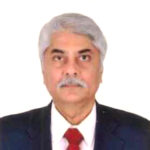 Justice M. Jaichandren hails from an illustrious family of lawyers, academics and politicians. Justice Jaichandren majored in criminology and then qualified as a lawyer by securing a gold medal. He successfully practiced in the Madras High Court and appeared in several civil, criminal, consumer, labour, administrative and debt recovery tribunals. He held office as an Advocate for the Government (Writs Side) in Chennai and was on the panel of several government organizations as senior counsel. His true passion lay in practicing Constitutional laws with focus on writs in the Madras High Court. He was appointed Judge, High Court of Madras in December 2005 and retired in February 2017.
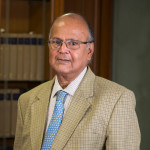 S Balasubramanian is a Commerce and Law Graduate. He is a member of the Delhi Bar Council, an associate Member of the Institute of Chartered Accountants of India, the Institute of Company Secretaries of India and Management Accountants of India.