

Lockdown and Implications
‘Lockdown’ is defined in Merriam-Webster as:
1. the confinement of prisoners to their cells for all or most of the day as a temporary security measure
2. an emergency measure or condition in which people are temporarily prevented from entering or leaving a restricted area or building (such as a school) during a threat of danger.
In view of the need to contain the spread of Covid-19 the Government has decided to impose complete lockdown under The Epidemic Diseases Act, 1897 and The Disaster Management Act, 2005 across states where novel corona virus cases have been reported so far.
The Government of India in a direction statement released by the Press Information Bureau has directed States to make people adhere to strict lockdown.[i]
[i]https://pib.gov.in/PressReleseDetail.aspx?PRID=1607659
The Ministry of Health and Family Welfare has issued notification[i]for State Governments to adhere:
[i]https://www.mohfw.gov.in/pdf/ChiefSecyDOLetter.pdf
a. State Governments will issue orders allowing only ‘essential services’ to operate in districts with confirmed COVID-19 cases. The focus will be on closure of all activities except essential services such as hospitals, telecom, medicine shops, provision stores etc.
*The Essential Services Maintenance Act, 1968 provides for the maintenance of certain essential services and the normal life of the community.
b. Establishments engaged in manufacturing and distribution of ‘essential commodities’ like medicines, vaccines, sanitizers, masks, medical devices, their ancillaries and support services etc., shall be exempt from these restrictions.
*The Essential Commodities Act, 1955 provided in the interest of the general public, for the control of the production, supply and distribution of, and trade and commerce, in certain commodities.
c. All train services and metro rail services shall be suspended including sub urban rail services.Goods trains may continue to operate for facilitating availability of essential commodities.Transport services may operate at mere skeletal level.
d. States to request industries, establishments etc., to allow their employees to work from home and provide remuneration to them during this period. Labour Ministry and Ministry of Corporate Affairs has issued necessary instructions to this effect.
The State Government in exercise of powers the under Epidemic Disease Act 1897 can if it thinks that the ordinary provisions of the law for the time being in force are insufficient may prescribe such temporary regulations to be observed by the public or by any person or class of persons as it shall deem necessary to prevent the outbreak of such disease. [i]
[i]Section 2 of the Epidemic Disease Act 1897
Any person who disobeys any order made under the Act may be charged with an offense under Section 188 of
IPC[i]and also under the Disaster Management Act, 2005.[ii]
[i]Section 3 of the Epidemic Disease Act 1897
[ii]Chapter X Sections 51-60 of The Disaster Management Act, 2005
IPC under Section 269 prescribes imprisonment for 6 months or fine or both to anyone who negligently does any act likely to spread infection. Section 270 prescribes punishment for anyone committing a malignant Act that is likely to spread infection with imprisonment up to 2 years or fine or both. Section 271 states if a person knowingly disobeys quarantine rule the person shall face imprisonment for 6 months or fine or both.
States have local laws to punish violators. For instance –In Karnataka offenders can be booked under Chapter XVIII of Karnataka Municipal Corporation Act, 1976. Section 42 of The Karnataka State Police Act, 1963 also provides for special measures to prevent outbreak of an epidemic.
Certain key Impacts of Lockdown on the Apex Court, MCA, NCT:
The MCA has relaxed the rules for board meetings and dispensed with the necessity of holding physical meetings up to June 30. Further spending of money for Covid-19 shall be considered an eligible CSR Activity.
The MCA has declared that companies to file web-based CAR for confirming their readiness towards Covid-19.
NCLT benches to remain closed till 31st March, 2020.
Supreme court forbids physical entry, video conferencing as mode of hearing and ordered sealing of lawyer’s chambers.
Supreme Court in Writ Petition (Civil) No (s). 3/2020 dated 23rd March, 2020 has dealt with Extension of limitation: To obviate difficulties caused by Coronavirus in filing petitions/ applications/ suits/ appeals/ all other proceedings within the period of limitation prescribed under the general law of limitation or under Special Laws, it is ordered that the period of limitation in such proceedings, irrespective of the limitation prescribed under the general law or Special Laws, whether condonable or not, shall stand extended w.e.f. 15th March 2020 till further order/s to be passed.




 He holds a Bachelor’s and Master’s Degree in Corporate Secretaryship and a Degree in Law. He is a Fellow member of the Institute of Company Secretaries of India and an Associate Member of the Corporate Governance Institute, UK and Ireland. He has also completed a program from ISB on ‘Value Creation through Mergers and Acquisitions.
 Mr P Muthusamy is an Indian Revenue Service (IRS) officer with an outstanding career of 30+ years of experience and expertise in all niche areas of Indirect Taxes covering a wide spectrum including GST, Customs, GATT Valuation, Central Excise and Foreign Trade.
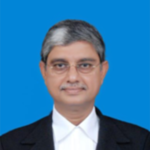 During his judicial role, he heard and decided a large number of cases, including some of the most sensitive, complicated, and high-stake matters on insolvency and bankruptcy, including many cases on resolution plans, shareholder disputes and Schemes of Amalgamation, De-mergers, restructuring etc.,
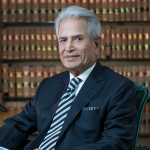 A K Mylsamy is the Founder, Managing Partner and the anchor of the firm. He holds a Degree in law and a Degree in Literature. He is enrolled with the Bar Council of Tamil Nadu.
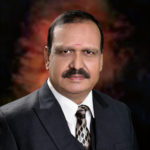 Mr. K Rajendran is a former Indian Revenue Service (IRS) officer with a distinguished service of 35 years in the Indirect Taxation Department with rich experience and expertise in the fields of Customs, Central Excise, Service Tax and GST. He possesses Master’s Degree in English literature. Prior to joining the Department, he served for the All India Radio, Coimbatore for a period of about 4 years.
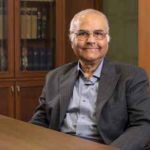 An MBA from the Indian Institute of Management, Calcutta, and an M.Sc. in Tourism Management from the Scottish Hotel School, UK, Ashok Anantram was one fo the earliest IIM graduates to enter the Indian hospitality industry. He joined India Tourism Development Corporation (ITDC) in 1970 and after a brief stint proceeded to the UK on a scholarship. On his return to India, he joined ITC Hotels Limited in 1975. Over the 30 years in this Organisation, he held senior leadership positions in Sales & Marketing and was its Vice President – Sales & Marketing. He was closely involved in decision making at the corporate level and saw the chain grow from a single hotel in 1975 to a very large multi-brand professional hospitality group.
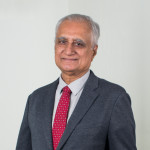 Mani holds a Bachelor Degree in Science and P.G. Diploma in Journalism and Public Relations. He has a rich and varied experience of over 4 decades in Banking, Finance, Hospitality and freelance Journalism. He began his career with Andhra Bank and had the benefit of several training programs in Banking.
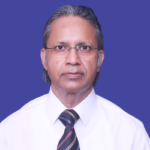 Mr. Kailash Chandra Kala joined the Department of Revenue, Ministry of Finance as ‘Customs Appraiser’ at Mumbai in the year 1993.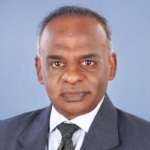
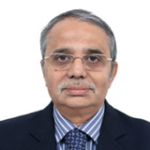 S Ramanujam, is a Chartered Accountant with over 40 years of experience and specialization in areas of Corporate Tax, Mergers or Demergers, Restructuring and Acquisitions. He worked as the Executive Vice-President, Group Taxation of the UB Group, Bangalore.
 K K Balu holds a degree in B.A and B.L and is a Corporate Lawyer having over 50 years of Legal, Teaching and Judicial experience.
 Justice M. Jaichandren hails from an illustrious family of lawyers, academics and politicians. Justice Jaichandren majored in criminology and then qualified as a lawyer by securing a gold medal. He successfully practiced in the Madras High Court and appeared in several civil, criminal, consumer, labour, administrative and debt recovery tribunals. He held office as an Advocate for the Government (Writs Side) in Chennai and was on the panel of several government organizations as senior counsel. His true passion lay in practicing Constitutional laws with focus on writs in the Madras High Court. He was appointed Judge, High Court of Madras in December 2005 and retired in February 2017.
 S Balasubramanian is a Commerce and Law Graduate. He is a member of the Delhi Bar Council, an associate Member of the Institute of Chartered Accountants of India, the Institute of Company Secretaries of India and Management Accountants of India.