
No joint liability under Section 138 Negotiable Instruments Act unless the account on which cheque was drawn is jointly maintained: Supreme Court
Section 138 of the Negotiable Instruments Act provides with the provision of punishment for the dishonor of cheques on the grounds of insufficiency of funds or that the cheque exceeds the amount arranged to be paid from that bank account by an agreement made with the bank of the person who issued the cheque.
To constitute an offence under Section 138 of the Act, the following ingredients are required to be fulfilled:
● A person must have drawn a cheque on a bank account maintained by him;
● The cheque should have been issued for the discharge, in whole or in part, of any debt or other liability;
● That cheque has been presented to bank within a period of three months from the date on which it is drawn;
● That cheque is returned by the bank unpaid, either because of the amount of money standing to the credit of the account is insufficient to honor the cheque or issuance of stop payment instructions by the Drawer to the Drawee Bank or that it exceeds the amount arranged to be paid from that account by an agreement made with the bank or when there is deliberate mismatch of signature of cheque;
● The payee or the holder in due course of the cheque makes a demand for the payment of the said amount of money by giving a notice in writing, to the drawer of the cheque, within 30 days of the receipt of information by him from the bank regarding the return of the cheque as unpaid;
● The drawer of such cheque fails to make payment of the said amount of money to the payee or the holder in due course of the cheque within 15 days of the receipt of the said notice;
● The complaint is to be filed before the Court of Chief Judicial Magistrate/Chief Metropolitan Magistrate within 30 days of the date of expiry of the 15 days-time period of receipt of the notice;
These conditions were given in the case of Kusum Ignots and Alloys ltd (v.) Pennnar Peterson Securities Ltd[1](2000) 2SCC 745.
The apex court pronounced a landmark judgment in the case of Alka Khandu Avhad (v.) Amar Syamprasad Mishra[2]2021 SCC OnLine SC 189 and another stating that the person who has not drawn the cheque cannot be prosecuted under section 138 of Negotiable Instruments Act even in case of Joint Liability. In the present case the original petition was filed by a lawyer namely Mr. Amar Syamprasad Mishra before the high court of Bombay against a married couple when the cheque issued to lawyer for his professional bill got dishonored. This cheque acted as an instrument for the payment of the bill for the legal work done by the lawyer to represent the married couple in a legal proceeding. In the present case the cheque was issued by Mr. Khandu Kacharu Avhad (Husband of Alka Khandu Avhad) alone. Mr. Amar Syamprasad Mishra prayed that the couple should be held liable for the offence punishable under Section 138 of the Negotiable Instruments Act as it was the joint liability of both the husband and wife to pay his bill. The accused wife, Mrs. Alka Khandu Avhad moved to the High Court of Bombay seeking to terminate the criminal proceeding against her [3](2019 SCC OnLine Bom 1630: (2020) 2 BC 371). She stated that her primary reason for contention is that she was neither a signatory to the cheque dishonored nor the account associated with the dishonored cheque is a joint account maintained by her along with a husband. This case was dismissed by the high court of Bombay.
In the Appeal to the Supreme Court, the Apex court bench observed few conditions before a person can be prosecuted under Section 138 of Negotiable Instruments act[4]Para 15 of the 2019 SCC OnLine Bom 1630: (2020) 2 BC 371 judgment. They are:
i) That the cheque is drawn by a person and on an account maintained by him with a banker;
ii) for the payment of any amount of money to another person from out of that account for the discharge, in whole or in part, of any debt or other liability; and
iii) The said cheque is returned by the bank unpaid, either because the amount of money standing to the credit of that account is insufficient to honor the cheque or that it exceeds the amount arranged to be paid from that account.
The Apex court declined and rejected the contention of Mr. Amar Syamprasad Mishra that both the husband and wife are liable under Section 138 of the Negotiable Instruments act. The Supreme Court held that “A person might have been jointly liable to pay the debt, but if such a person who might have been liable to pay the debt jointly, cannot be prosecuted unless the bank account is jointly maintained and that he was a signatory to the cheque.”[5]Para 16 of the 2019 SCC OnLine Bom 1630: (2020) 2 BC 371 judgmentOn the question of Whether Section 141 of the Negotiable Instruments Act is applicable to the current circumstances the Supreme Court held that “There is no question of invoking Section 141 of the NI Act against the appellant, as the liability is the individual liability (may be a joint liabilities), but cannot be said to be the offence committed by a company or by it corporate or firm or other associations of individuals. The appellant herein is neither a Director nor a partner in any firm who has issued the cheque. Therefore, even the appellant cannot be convicted with the aid of Section 141 of the NI Act.”[6]Para 18 of the 2019 SCC OnLine Bom 1630: (2020) 2 BC 371 judgment
Hence the Apex Court allowed the Appeal by Mrs.Alka Khandu Avhad and quashed the complaint against her.
References
| ↑1 | (2000) 2SCC 745 |
|---|---|
| ↑2 | 2021 SCC OnLine SC 189 |
| ↑3 | (2019 SCC OnLine Bom 1630: (2020) 2 BC 371 |
| ↑4 | Para 15 of the 2019 SCC OnLine Bom 1630: (2020) 2 BC 371 judgment |
| ↑5 | Para 16 of the 2019 SCC OnLine Bom 1630: (2020) 2 BC 371 judgment |
| ↑6 | Para 18 of the 2019 SCC OnLine Bom 1630: (2020) 2 BC 371 judgment |






 He holds a Bachelor’s and Master’s Degree in Corporate Secretaryship and a Degree in Law. He is a Fellow member of the Institute of Company Secretaries of India and an Associate Member of the Corporate Governance Institute, UK and Ireland. He has also completed a program from ISB on ‘Value Creation through Mergers and Acquisitions.
 Mr P Muthusamy is an Indian Revenue Service (IRS) officer with an outstanding career of 30+ years of experience and expertise in all niche areas of Indirect Taxes covering a wide spectrum including GST, Customs, GATT Valuation, Central Excise and Foreign Trade.
 During his judicial role, he heard and decided a large number of cases, including some of the most sensitive, complicated, and high-stake matters on insolvency and bankruptcy, including many cases on resolution plans, shareholder disputes and Schemes of Amalgamation, De-mergers, restructuring etc.,
 A K Mylsamy is the Founder, Managing Partner and the anchor of the firm. He holds a Degree in law and a Degree in Literature. He is enrolled with the Bar Council of Tamil Nadu.
 Mr. K Rajendran is a former Indian Revenue Service (IRS) officer with a distinguished service of 35 years in the Indirect Taxation Department with rich experience and expertise in the fields of Customs, Central Excise, Service Tax and GST. He possesses Master’s Degree in English literature. Prior to joining the Department, he served for the All India Radio, Coimbatore for a period of about 4 years.
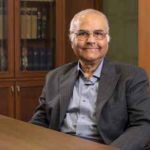 An MBA from the Indian Institute of Management, Calcutta, and an M.Sc. in Tourism Management from the Scottish Hotel School, UK, Ashok Anantram was one fo the earliest IIM graduates to enter the Indian hospitality industry. He joined India Tourism Development Corporation (ITDC) in 1970 and after a brief stint proceeded to the UK on a scholarship. On his return to India, he joined ITC Hotels Limited in 1975. Over the 30 years in this Organisation, he held senior leadership positions in Sales & Marketing and was its Vice President – Sales & Marketing. He was closely involved in decision making at the corporate level and saw the chain grow from a single hotel in 1975 to a very large multi-brand professional hospitality group.
 Mani holds a Bachelor Degree in Science and P.G. Diploma in Journalism and Public Relations. He has a rich and varied experience of over 4 decades in Banking, Finance, Hospitality and freelance Journalism. He began his career with Andhra Bank and had the benefit of several training programs in Banking.
 Mr. Kailash Chandra Kala joined the Department of Revenue, Ministry of Finance as ‘Customs Appraiser’ at Mumbai in the year 1993.
 S Ramanujam, is a Chartered Accountant with over 40 years of experience and specialization in areas of Corporate Tax, Mergers or Demergers, Restructuring and Acquisitions. He worked as the Executive Vice-President, Group Taxation of the UB Group, Bangalore.
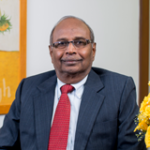 K K Balu holds a degree in B.A and B.L and is a Corporate Lawyer having over 50 years of Legal, Teaching and Judicial experience.
 Justice M. Jaichandren hails from an illustrious family of lawyers, academics and politicians. Justice Jaichandren majored in criminology and then qualified as a lawyer by securing a gold medal. He successfully practiced in the Madras High Court and appeared in several civil, criminal, consumer, labour, administrative and debt recovery tribunals. He held office as an Advocate for the Government (Writs Side) in Chennai and was on the panel of several government organizations as senior counsel. His true passion lay in practicing Constitutional laws with focus on writs in the Madras High Court. He was appointed Judge, High Court of Madras in December 2005 and retired in February 2017.
 S Balasubramanian is a Commerce and Law Graduate. He is a member of the Delhi Bar Council, an associate Member of the Institute of Chartered Accountants of India, the Institute of Company Secretaries of India and Management Accountants of India.