
Indian Pharma: Shock after Shock
India is known for its Pharmaceutical exports all over the world and earned good reputation for its low-cost and quality generic medicines. But with passing years, the name and fame of India wasblemishedin the book, Bottle of Lies, written by an Investigative Journalist, Katherine Eban. While the matters are so, the latest report by the International Narcotics Control Board (“Board”) reveals that India tops among the suppliers of drugs used for trafficking. The Report highlights the areas where India is acting in an irregular way and also how Indian drugs are used for trafficking. This article attempts to analyse the report and outline the possible outcome if the situation continues.
Another Blow to Indian Pharma
The United Nations Office of Drugs and Crime released the Report of the International Narcotics Control Board for 2019. In the same, India was named as one of the top manufacturers of the illicit and legit drugs being smuggled to various countries. Though the book revealed how Indian Companies create sub-standard drugs and circulate them to control the market, it is shocking to see that even quality and licit Indian drugs are misused in the global market. The Report showcases how various Indian drugs are used for non-medicinal purposes and the statistics reveals that India actually leads all other countries in this regard.
The Narcotic Drugs like opium were widely circulated all around the world in 2017 and there was a substantial reduction in the stocks and production of opium in 2018. It was expected that this downward trend would eventually eliminate opium from International Markets but to everyone’s surprise the Opium market increased with the use and imports and here comes the infamous role of our country. Most of the drugs as guessed come under the ambit of Psychotropic Drugs – Any drug capable of affecting the mind, emotions and behaviour.
a) Benzodiazepines is the highly manufactured, traded and consumed internationally controlled psychotropics in 2018 and India is one of the major manufacturers which amount to 23% of the global Benzodiazepine manufacture in licit market. But it is pertinent to note that in 2018, 11 countries were reported with consumption more than 10S-DDDper 1000 inhabitants in a day whereas it is more than 2S-DDD per 1000 inhabitants in a day in 25 countries.
b) Tramadol, an opioid analgesic which is not under the international control, is infamous for its non-medical use. The Board noted this increasing misuse of Tramadol especially in countries of Western and Northern Africa, in Near and Middle East and in South Asia. In India, on 2017, the National Drug Use Survey submitted that nearly 1% of the general population is engaged in non-medical use of Pharmaceutical opiods.
While that is the case, the hike in global demand for tramadol is satisfied by India through unregulated imports. The lax regulatory and border controls in Africa increased the demand for the drug which in turn encouraged the trafficking of Indian originated Tramadol and thus, India slowly emerged to be the major manufacturer of tramadol for clandestine markets.
c) Cough Syrups and Codine: Codeine Cough Syrups are easily purchasable and accessible due to its wide and cheap market with low risk of negative health consequences. India is also listed among the countries which were involved in misuse of Cough Syrups. There have been reports of misuse of preparations containing codeine. These preparations are included in Schedule III of the Convention which is to be exempted from certain provisions of 1961 Convention. These cough syrups must not contain more than 100 mg of the drug per dosage unit and with a concentration of not more than 2.5% in undivided preparations. But they are regrettably used as low alcoholic drinks like Purple drinks and also used as ingredients in cocktails.
d) Cannabis – Illicit cultivation of cannabis is a challenge to India and the analysis of data from 2010 to 2017 reveal that India is one of the countries with the largest extent of illicit cannabis cultivation and production. Indian drug Enforcement authorities eradicated 1,980 hectares of Cannabis herbs in 2017.
e) Form P – Apart from the drugs usage and illicit export, India came to be questioned for the irregularity with respect to Form P submission. Form P is used to report the annual statistics on the manufacture, trade and consumption of substances controlled under the Convention on Psychotropic Substances, 1971. It was noted in the Board report that 86% of the countries have submitted Form P and these countries submit their mandatory and voluntary Statistical Reports regularly. On the other hand it is bitter to state that India is one of the countries that failed to submit Form P within the deadline despite being a major drug manufacturing and exporting country.
f) Phenobarbital – It is a substance included on WHO Model List of Essential Medicines for treating Epilepsy and it is one of the most internationally traded controlled psychotropic substances. India produced 87.2 tons of Phenobarbital (in 2017) making us a potential hub of drug misuse.
Seizures and Eradication
- India has increased the eradication of illicit opium poppy from 2015.
a) 1,400 ha in 2015
b) 2,635 ha in 2016
c) 3,076 ha in 2017 + 9 tons of poppy straw seizure in 2017
d) 3,508 ha in 2018 + 16 tons of poppy straw seizure in 2018
- 5 tons of Cannabis herbs were seized by India in 2018 which amounts to 79% of total cannabis herb seizures in South Asia.
- India and Nepal confiscated almost 100% (5.2 tons) of the total cannabis resin.
- The amount of opium seized in India increased to 4.1 tons in 2018 from 2.6 tons in 2017.
- India has seized the largest amount of heroin in South Asia which amounts to 1.2 tons.
- India also reported seizure of 51,821 bottles of Phensedyl (Codine-based preparation) in 2018.
- Amphetamine-type stimulants (powerful stimulator of Central Nervous System) were also seized at huge proportions (931 kg) in 2018 and it was followed by methaqualone (sedative hypnotic drug) seizure of about 99kg. But it was shocking to note that a single seizure on Methaqualone was made on 25th June 2018, which ranged up to 30 kg, destined to be exported to United States.
- Ephedrine and Pseudoephedrine (blood vessels stimulator), these controlled precursors were diverted to illicit channels and Narcotics Control Bureau of India stated that 1.8 tons of Pseudoephedrine were confiscated in Noida on 11 May 2019 in a single seizure which was the largest seizure in India. There are reports to show that these preparations were trafficked to Myanmar for the purpose of precursor extractions.
- Acetic Anhydride solutions (reagent in organic reactions) were also seized in large quantities amounting to 8,998 litres.
- From 2013 to 2017, most of the tramadol seized around the world were reported to be originated from India and in 2017, India was the source of 87% of Tramadol seized in Ghana.
The underrated efforts
- As we concentrate only on the negative sides, we failed to appreciate our Government on taking affirmative action to prevent the drug misuse. The Board has appreciated the reports submitted by the Governments of Kuwait and India with respect to the drug abuse in their respective countries. This acknowledgement has been shadowed due to the huge negative impact created due to drug trafficking.
- India was portrayed as a significant source of trafficked, falsified, sub-standard and illicitly manufactured drugs branded as tramadol. To counter this, Indian Government scheduled Tramadol under the Narcotic Drugs and Psychotropic Substances Act, 1985. Experts in Ghana and Nigeria mentioned that there was an appreciable and significant decline in the large border and port seizures of tramadol. Due to the reduction in the tramadol circulation (where India is a major source), the supply has been reduced resulting in decreased grey market availability and eventually the price of tramadol tablets increased in illicit market which will force some users to quit misuse of tramadol.
- In October 2018, in Chandigarh, the heads of enforcement agencies of South Asia (Bangladesh, Bhutan, India, Maldives, Nepal and Sri Lanka) conducted a meeting and discussed on how to use the existing bilateral and regional cooperation mechanisms among countries to control drug trafficking.
- In consonance with International Drug Control Conventions and National Legislations and Policies, India has adopted the National Action Plan for Drug Demand Reduction (2018-2023). The Action plan aims at prevention of Drug and Substance Abuse through education, de-addiction and rehabilitation of affected individuals and their families to support the drug-dependent users. Moreover, the plan aims at training and capacity-building for service providers through the participation of the Government and Non-Governmental organisations.
- In 2019, the African Union and the Indian Council of Medical Research have signed a memorandum of understanding, establishing a framework to formalize the cooperation in health sector between India and Africa. This agreement is inclusive of trade facilitation in pharmaceuticals and also supports Africa in the manufacture of drugs and medicines (including drugs under International Control).
- India and Sri Lanka have conducted surveys to assess the prevalence of drug abuse and the Board has appreciated this initiative and suggested countries to allocate resources for the same.
Suggestions to counter the Drug Smuggling
- The Board had suggested and called upon all the Governments to furnish regularly to the Board, the information on seizures of Psychotropic substances ordered through Internet and drugs delivered through mail. This is in accordance with the Commission on Narcotic Drugs Resolution 50/11. We can see our Government trying to impose heavy restrictions on Imports and Exports but we fail to track the Internet usage.By monitoring the drug orders in Internet, India can prevent misuse of drugs (especially making them out of reach from children and teens).
- The Board also insisted that the Governments must adhere to the Convention on Psychotropic Substances, 1971 (especially Article 3 of the Convention). The Board allows exemption of a preparation from some stringent measures of control, if the Convention is adhered to. But it is also emphasised by the Board that certain measures of control have to be strictly followed like reporting annual data and provisions related to International trade.
- The Report,Magnitude of Substance Use in India 2019 reveals that cannabis and Opiods are the most frequently abused substances after alcohol in India and heroin was the most commonly used opioid in India. It is also mentioned that the existing treatment programmes in India are inadequate as large number of people are affected by Substance Abuse. Thus it is suggested that India must concentrate on resources in areas of healthcare infrastructure and supply of medicine.
Conclusion
Though it is undisputable that India is lacking and continuously getting criticised for its lax regulatory policies, huge illicit drug export and easy circulation and misuse of essential medicines, it is pertinent to note that India is taking serious steps to counter and curb the drug trafficking. Some measures were commended and supported by the Board but only the negative side is projected and discussed. It is also to be understood that the Governmental actions alone will not fetch any positive result and any successful policy is to be celebrated equally by media and general public (Drug trafficking is not an exception). This imminent threat to the health and Pharma Sector(which directly affects the reputation of India) can be neutralised only through public-government cooperation.


 He holds a Bachelor’s and Master’s Degree in Corporate Secretaryship and a Degree in Law. He is a Fellow member of the Institute of Company Secretaries of India and an Associate Member of the Corporate Governance Institute, UK and Ireland. He has also completed a program from ISB on ‘Value Creation through Mergers and Acquisitions.
 Mr P Muthusamy is an Indian Revenue Service (IRS) officer with an outstanding career of 30+ years of experience and expertise in all niche areas of Indirect Taxes covering a wide spectrum including GST, Customs, GATT Valuation, Central Excise and Foreign Trade.
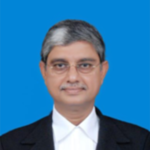 During his judicial role, he heard and decided a large number of cases, including some of the most sensitive, complicated, and high-stake matters on insolvency and bankruptcy, including many cases on resolution plans, shareholder disputes and Schemes of Amalgamation, De-mergers, restructuring etc.,
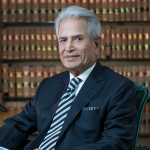 A K Mylsamy is the Founder, Managing Partner and the anchor of the firm. He holds a Degree in law and a Degree in Literature. He is enrolled with the Bar Council of Tamil Nadu.
 Mr. K Rajendran is a former Indian Revenue Service (IRS) officer with a distinguished service of 35 years in the Indirect Taxation Department with rich experience and expertise in the fields of Customs, Central Excise, Service Tax and GST. He possesses Master’s Degree in English literature. Prior to joining the Department, he served for the All India Radio, Coimbatore for a period of about 4 years.
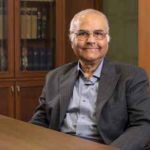 An MBA from the Indian Institute of Management, Calcutta, and an M.Sc. in Tourism Management from the Scottish Hotel School, UK, Ashok Anantram was one fo the earliest IIM graduates to enter the Indian hospitality industry. He joined India Tourism Development Corporation (ITDC) in 1970 and after a brief stint proceeded to the UK on a scholarship. On his return to India, he joined ITC Hotels Limited in 1975. Over the 30 years in this Organisation, he held senior leadership positions in Sales & Marketing and was its Vice President – Sales & Marketing. He was closely involved in decision making at the corporate level and saw the chain grow from a single hotel in 1975 to a very large multi-brand professional hospitality group.
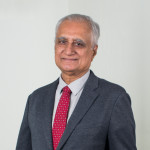 Mani holds a Bachelor Degree in Science and P.G. Diploma in Journalism and Public Relations. He has a rich and varied experience of over 4 decades in Banking, Finance, Hospitality and freelance Journalism. He began his career with Andhra Bank and had the benefit of several training programs in Banking.
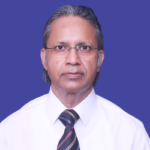 Mr. Kailash Chandra Kala joined the Department of Revenue, Ministry of Finance as ‘Customs Appraiser’ at Mumbai in the year 1993.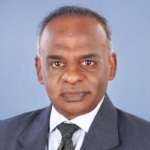
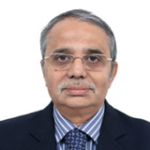 S Ramanujam, is a Chartered Accountant with over 40 years of experience and specialization in areas of Corporate Tax, Mergers or Demergers, Restructuring and Acquisitions. He worked as the Executive Vice-President, Group Taxation of the UB Group, Bangalore.
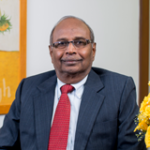 K K Balu holds a degree in B.A and B.L and is a Corporate Lawyer having over 50 years of Legal, Teaching and Judicial experience.
 Justice M. Jaichandren hails from an illustrious family of lawyers, academics and politicians. Justice Jaichandren majored in criminology and then qualified as a lawyer by securing a gold medal. He successfully practiced in the Madras High Court and appeared in several civil, criminal, consumer, labour, administrative and debt recovery tribunals. He held office as an Advocate for the Government (Writs Side) in Chennai and was on the panel of several government organizations as senior counsel. His true passion lay in practicing Constitutional laws with focus on writs in the Madras High Court. He was appointed Judge, High Court of Madras in December 2005 and retired in February 2017.
 S Balasubramanian is a Commerce and Law Graduate. He is a member of the Delhi Bar Council, an associate Member of the Institute of Chartered Accountants of India, the Institute of Company Secretaries of India and Management Accountants of India.