
Issue 25 – Insights 2
Insights – Change is Constant
Introduction
The Companies Act, 2013 which came into effect on April 1, 2014 replaced the earlier Companies Act, 1956. On 27th July, 2017, the Lok Sabha passed the Companies Act (Amendment) Bill, 2016 with a view to replace the Companies Act, 2013. This has been proposed in order to remove several compliance and reporting challenges being faced by public and private companies alike. The Bill that was passed by the Lok Sabha now has to go to the Rajya Sabha for its approval.
What’s new now?
The Companies (Amendment) Bill, 2017 proposes to promote further ease of doing business by simplifying procedural and reporting requirements and aligning to the general accounting standards. To this end, the following broad amendments in sections of the Companies Act, 2013 have been proposed.
Significant changes to the definitions have been proposed with a view to remove ambiguity in their interpretation. Some of the key definitions are given below.
Basic definitions
| Definition | What the CA, 2013 act says | What the amendment rules, 2017 proposes |
|---|---|---|
| Associate company | Control of at least 20% total share capital | Significant influence has been amended to include at least 20% of the voting power or control or participation in business decisions under an agreement |
| Holding company | Company did not imply any body corporate | Company to include any body corporate |
| Public company | The phrase and was not included in the definition | proposed to include the phrase and to ensure that both conditions have to be satisfied for a company to become a public company |
| Small company | Paid up capital: Rs. 50 lakhs - Rs. 5 Crores OR Turnover: Rs. 2 Crores - Rs. 20 Crores | Paid up capital: Rs. 50 lakhs - Rs. 10 Crores OR Turnover: Rs. 2 Crores - Rs. 100 Crores |
| Subsidiary company | Holding company exercises or control more than one half of the total share capital | Holding company exercises or control more than one half of the total voting power either on its own or together with one or more of its subsidiary companies |

 He holds a Bachelor’s and Master’s Degree in Corporate Secretaryship and a Degree in Law. He is a Fellow member of the Institute of Company Secretaries of India and an Associate Member of the Corporate Governance Institute, UK and Ireland. He has also completed a program from ISB on ‘Value Creation through Mergers and Acquisitions.
 Mr P Muthusamy is an Indian Revenue Service (IRS) officer with an outstanding career of 30+ years of experience and expertise in all niche areas of Indirect Taxes covering a wide spectrum including GST, Customs, GATT Valuation, Central Excise and Foreign Trade.
 During his judicial role, he heard and decided a large number of cases, including some of the most sensitive, complicated, and high-stake matters on insolvency and bankruptcy, including many cases on resolution plans, shareholder disputes and Schemes of Amalgamation, De-mergers, restructuring etc.,
 A K Mylsamy is the Founder, Managing Partner and the anchor of the firm. He holds a Degree in law and a Degree in Literature. He is enrolled with the Bar Council of Tamil Nadu.
 Mr. K Rajendran is a former Indian Revenue Service (IRS) officer with a distinguished service of 35 years in the Indirect Taxation Department with rich experience and expertise in the fields of Customs, Central Excise, Service Tax and GST. He possesses Master’s Degree in English literature. Prior to joining the Department, he served for the All India Radio, Coimbatore for a period of about 4 years.
 An MBA from the Indian Institute of Management, Calcutta, and an M.Sc. in Tourism Management from the Scottish Hotel School, UK, Ashok Anantram was one fo the earliest IIM graduates to enter the Indian hospitality industry. He joined India Tourism Development Corporation (ITDC) in 1970 and after a brief stint proceeded to the UK on a scholarship. On his return to India, he joined ITC Hotels Limited in 1975. Over the 30 years in this Organisation, he held senior leadership positions in Sales & Marketing and was its Vice President – Sales & Marketing. He was closely involved in decision making at the corporate level and saw the chain grow from a single hotel in 1975 to a very large multi-brand professional hospitality group.
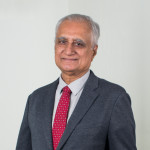 Mani holds a Bachelor Degree in Science and P.G. Diploma in Journalism and Public Relations. He has a rich and varied experience of over 4 decades in Banking, Finance, Hospitality and freelance Journalism. He began his career with Andhra Bank and had the benefit of several training programs in Banking.
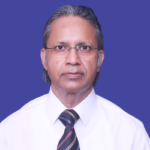 Mr. Kailash Chandra Kala joined the Department of Revenue, Ministry of Finance as ‘Customs Appraiser’ at Mumbai in the year 1993.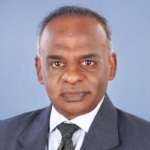
 S Ramanujam, is a Chartered Accountant with over 40 years of experience and specialization in areas of Corporate Tax, Mergers or Demergers, Restructuring and Acquisitions. He worked as the Executive Vice-President, Group Taxation of the UB Group, Bangalore.
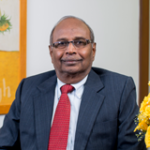 K K Balu holds a degree in B.A and B.L and is a Corporate Lawyer having over 50 years of Legal, Teaching and Judicial experience.
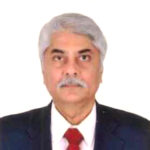 Justice M. Jaichandren hails from an illustrious family of lawyers, academics and politicians. Justice Jaichandren majored in criminology and then qualified as a lawyer by securing a gold medal. He successfully practiced in the Madras High Court and appeared in several civil, criminal, consumer, labour, administrative and debt recovery tribunals. He held office as an Advocate for the Government (Writs Side) in Chennai and was on the panel of several government organizations as senior counsel. His true passion lay in practicing Constitutional laws with focus on writs in the Madras High Court. He was appointed Judge, High Court of Madras in December 2005 and retired in February 2017.
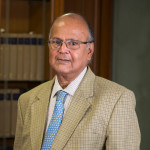 S Balasubramanian is a Commerce and Law Graduate. He is a member of the Delhi Bar Council, an associate Member of the Institute of Chartered Accountants of India, the Institute of Company Secretaries of India and Management Accountants of India.